
Self-storage operations · editable .xlsx files
Excel templates built around facility work
Find focused workbooks for self-storage finance, leasing, daily operations, facilities, marketing and compliance tracking.
Six operating areas
Understand the categories →Start with the decision in front of you
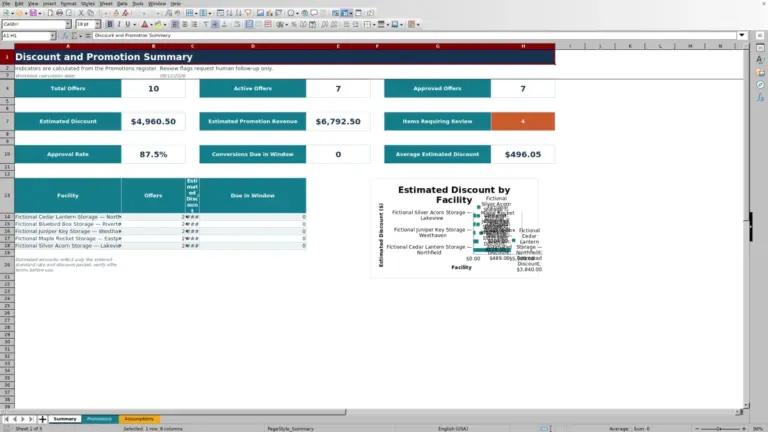
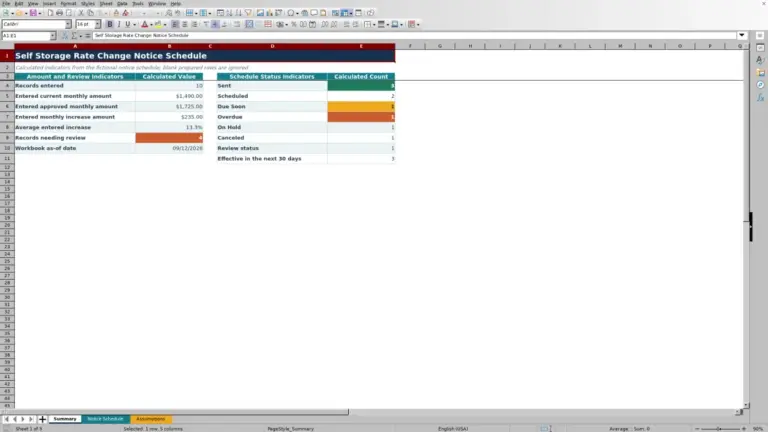
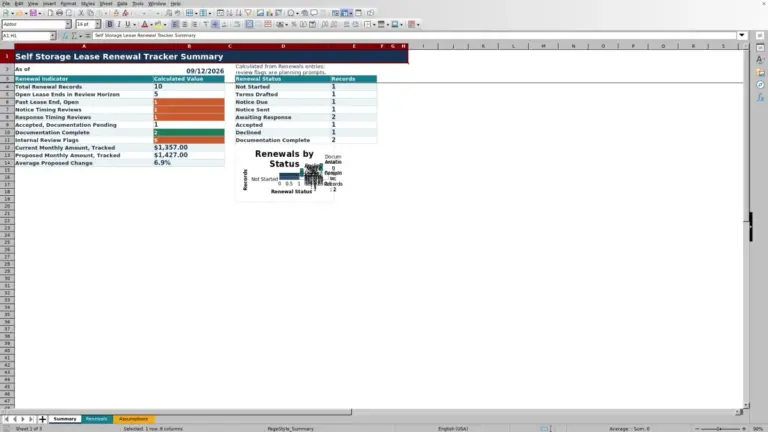
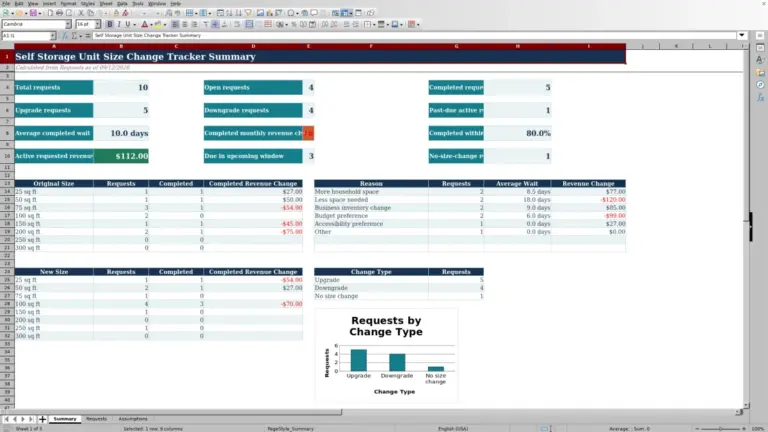
Finance25 publishedBudgets, pro formas, cash flow, valuation, rate assumptions and monthly financial review.Leasing21 publishedUnit inventory, rent rolls, reservations, move-ins, move-outs, notices and tenant follow-up.Operations0 publishedDaily facility checks, occupancy reporting, handovers, calls, service requests and staff coverage.Facilities0 publishedInspections, preventive maintenance, work orders, utilities, vendors and capital planning.Marketing0 publishedFeasibility, competitor rates, lead sources, campaigns, promotions and conversion tracking.Compliance0 publishedAdministrative trackers for notices, permits, training, incidents, insurance and retention.
Available files
Open the library →Recently published templates
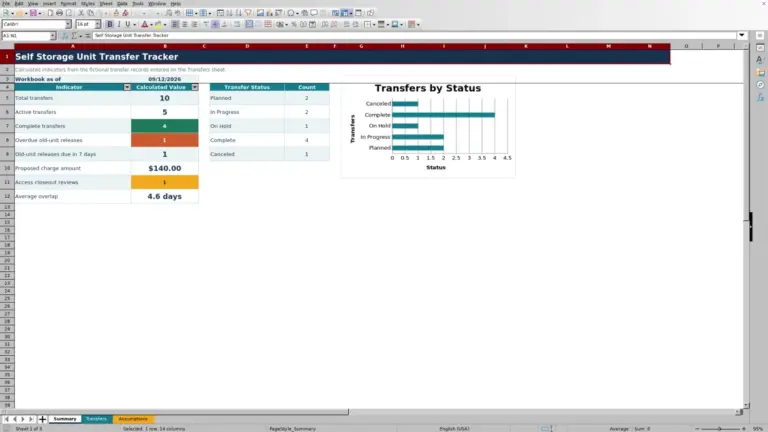
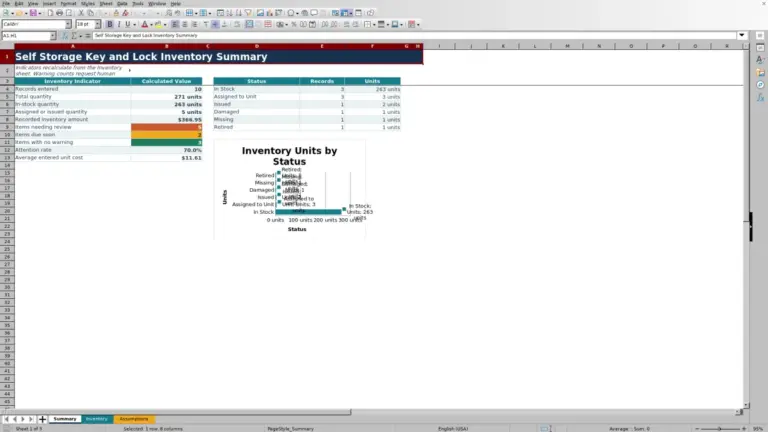
Choose by workflow
Match the sheet to the operating question
A bounded workbook is easier to verify than one file that mixes unit status, tenant contact, maintenance, cash and market assumptions.
See the operating picture
Operations covers occupancy snapshots, handovers, service requests and recurring checks.
Follow the next tenant action
Leasing organizes inventory, reservations, move-ins, notices and move-outs.
Test assumptions separately
Finance distinguishes pro formas, budgets, forecasts and acquisition models.
Connect inspection to repair
Facilities links assets, observations, work orders and capital plans.
From search to working copy
A short path to a usable workbook
- 01
Search
Describe the task or filter the files that are already published.
- 02
Review
Check purpose, worksheets, inputs, formulas and stated limits.
- 03
Download
Save the available .xlsx file without creating an account.
- 04
Adapt
Work on a copy and verify results against approved source records.
Before entering facility data
Prepare the source behind each decision
Define the facility, reporting period, unit basis, status definitions and source date before filling a workbook. Occupancy depends on a consistent unit inventory; revenue depends on comparable rates and occupied units; a work order needs an asset, priority, owner and closure evidence.
Each template page describes the worksheets, inputs and formulas in the available file. Example values illustrate a workflow and are not records or results from a real facility.
About the editors
About the library →Two perspectives on facility records

Facility operations editor
Casey’s articles cover unit inventory, leasing workflows, daily facility routines, maintenance records and tenant follow-up. The guidance identifies the dates, statuses and handoffs that keep a worksheet usable while separating ordinary operating records from payment details, access credentials and other information that belongs in controlled systems.

Finance and performance editor
Elliot’s articles focus on facility budgets, occupancy reporting, revenue assumptions, acquisition models and performance comparisons. The explanations call out source periods, units, formulas and scenario limits so readers can distinguish an operating estimate from an accounting record, valuation, tax conclusion or investment recommendation.
Common questions
Before using a template
Which files are available now?
The library and category counts include only published templates. A category can remain empty while its files are being prepared.
Do these workbooks replace facility software?
No. They support defined reviews and workflows. Live availability, payments, access control, tenant records and accounting require appropriate systems.
Can I change columns and formulas?
The files are editable. Keep the original and test every change because moving cells or deleting columns can break references.
How do I report a workbook issue?
Use the contact form and include the page URL, worksheet or cell, software and observed result without attaching private facility or tenant data.